Guram Tsibakhashvili in Tbilisi
Guram Tsibakhashvili is one of Georgia’s key photographers and artists. Over the past several years, hardly a month has gone by in Tbilisi without one of his solo exhibitions. Today, his works are shown in Europe several times a year and published in major magazines such as National Geographic. Yet his path began back in the 1980s and 1990s, when the country was facing a profound crisis. Guram captured that period in his photographs, becoming a true chronicler of Georgian post-Soviet art.
On the eve of an exhibition devoted to the artist’s archive, we spoke with him about his career, his friends, the artistic scene in Tbilisi, his own projects, and, of course, Georgia.
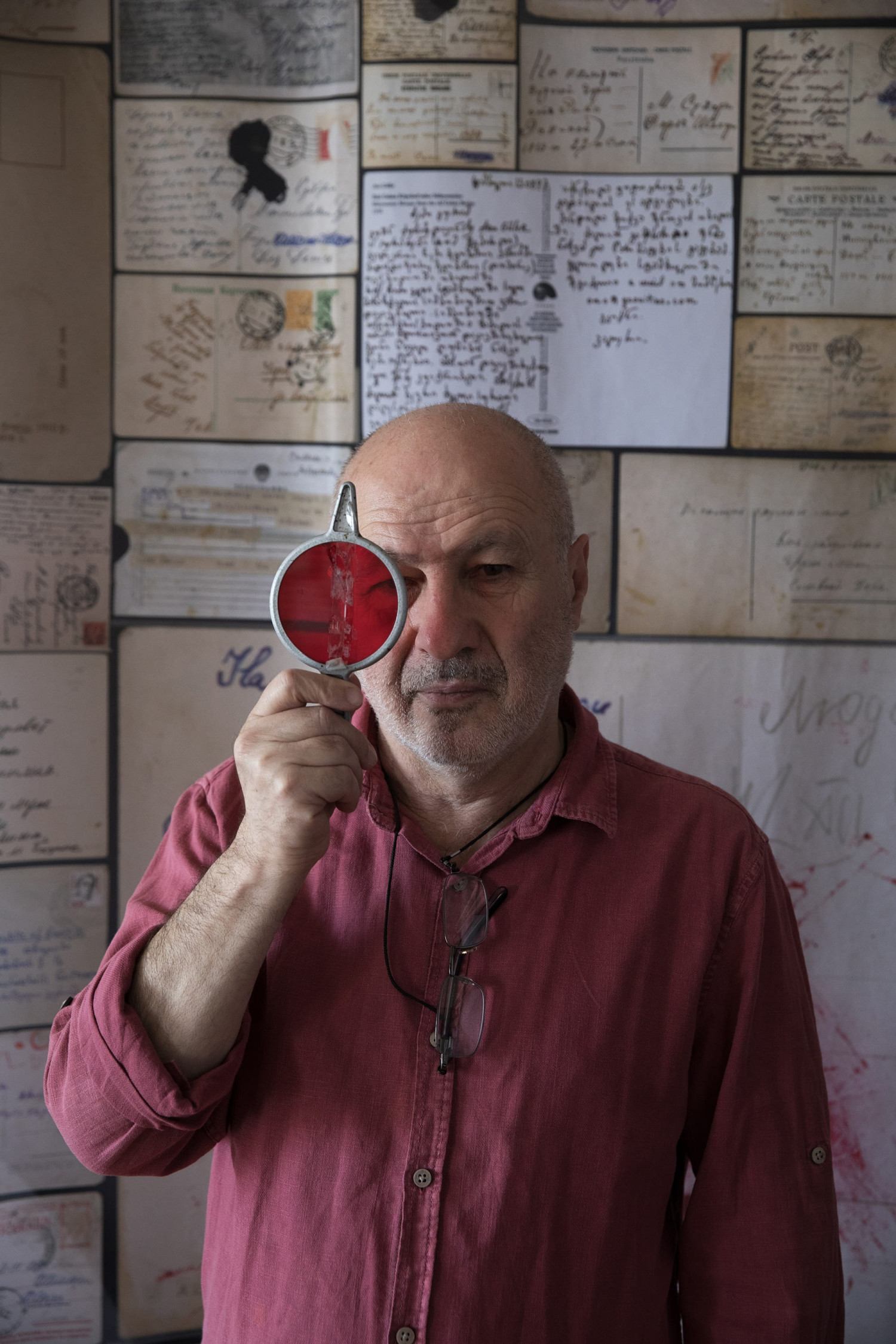
TELL US HOW YOUR ARTISTIC PATH BEGAN. HOW DID YOU COME TO PHOTOGRAPHY IN PARTICULAR?
I started drawing back in school. I would come across some kind of art and try to reproduce it. But at the time, being an artist was not considered a serious profession — everyone saw artists as weirdos. My parents insisted that I get a “real” profession first, and only then do whatever I wanted. So I trained as a chemist and worked in the field for more than ten years, combining it with photography.
If being an artist was not considered a serious profession, then photographers who treated photography as art simply did not exist at all. People who practiced art photography did it only for themselves. I never received an academic art education, and there was no one for me to learn from. After all, I did not meet the artists of my generation right away, so I had to teach myself everything.
AND WHAT SOURCES DID YOU USE TO DISCOVER ART? WAS THERE ANYTHING THAT INSPIRED YOU?
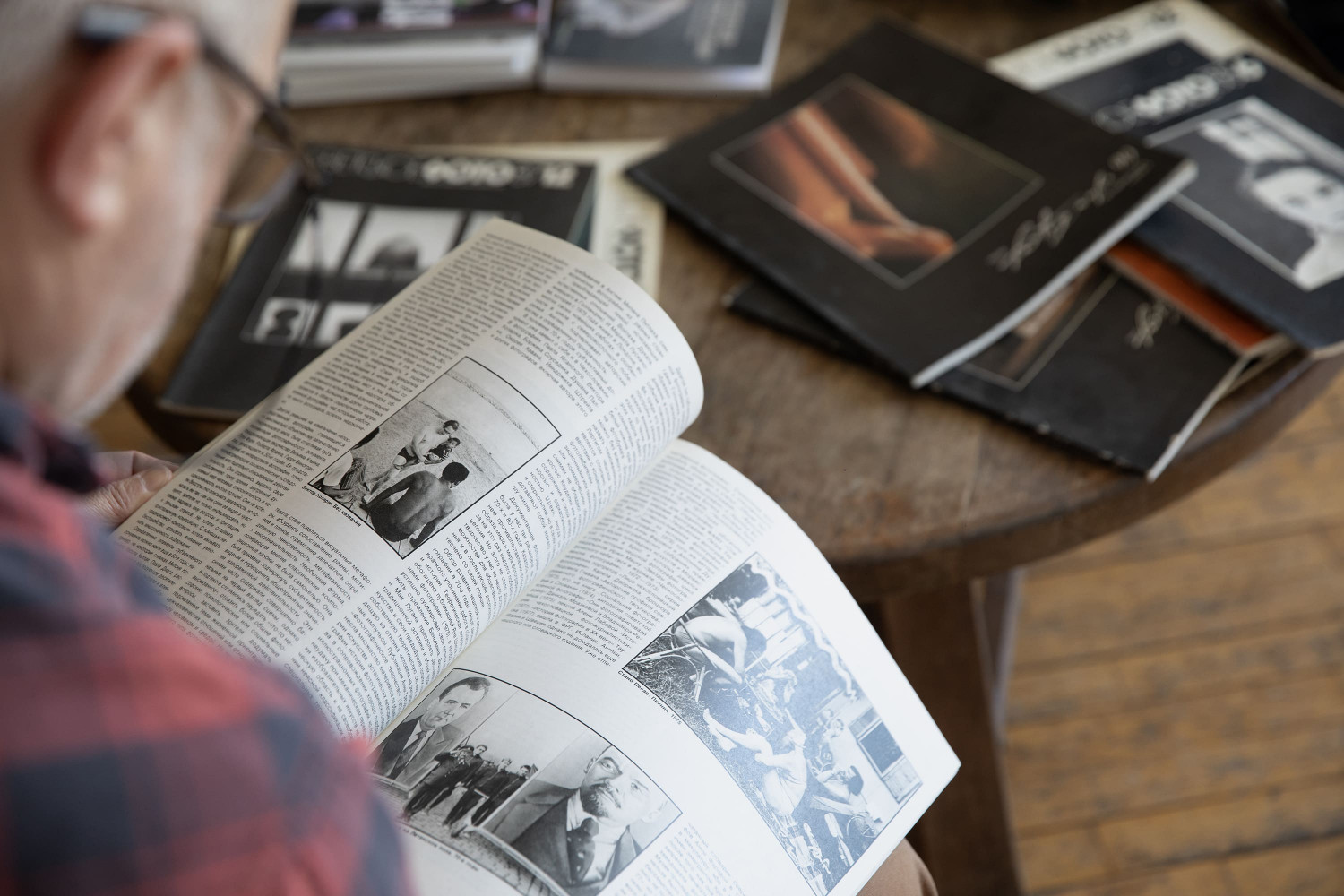
Everyone has things that made an impression on them, and of course I had them too. I tried to subscribe to every art magazine that existed at the time. Even "Soviet Photo". I did not like it very much, because it had a lot of photographs that held no value for me — things like images of Brezhnev and Lenin on every spread. Today I am already interested in that subject, but back then I was more interested in art photography than documentary photography. Still, I read the materials from which I could glean some practical technical information.
There was also a Czech magazine called Revue Fotografie. It published various Western photographers, and for me this was extremely valuable material. At the time it cost ten rubles, which was a lot of money. Or rather, its official price was two rubles, but because it often featured photographs of naked women, it was quickly swept off the shelves by people who were not interested in art but were very much interested in nudity. So you had to look for it through resellers — at a much higher price.
As for contemporary art in the global sense, there was a large black Soviet book called "Modernism". I even owned a copy, but I lent it to someone and it was never returned, although today I am very interested in that publication. It was almost the only book that reproduced Western artists such as Andy Warhol. Of course, it did not say anything good about them — quite the opposite — but at least it included images, so one could actually see that art. I paid no attention to what exactly was written there; what mattered to me was seeing that such artists existed and that they were making this kind of art.
Sometimes what was written mattered so little that I subscribed to the Hungarian film magazine Filmvilág, even though I did not understand a single word of it. And, to be honest, the magazine was of poor quality, but it printed portraits of directors I had never seen or known before. I kept one issue for a very long time because it had a portrait of Luis Buñuel, who interested me greatly — not only as a director, but also as a Surrealist.
In general, we received only fragments of information, but now that even seems interesting to me. Because if we had had more material, I think we would have tried to make something similar, rather than create something of our own. And Georgian art might have taken an entirely different path.
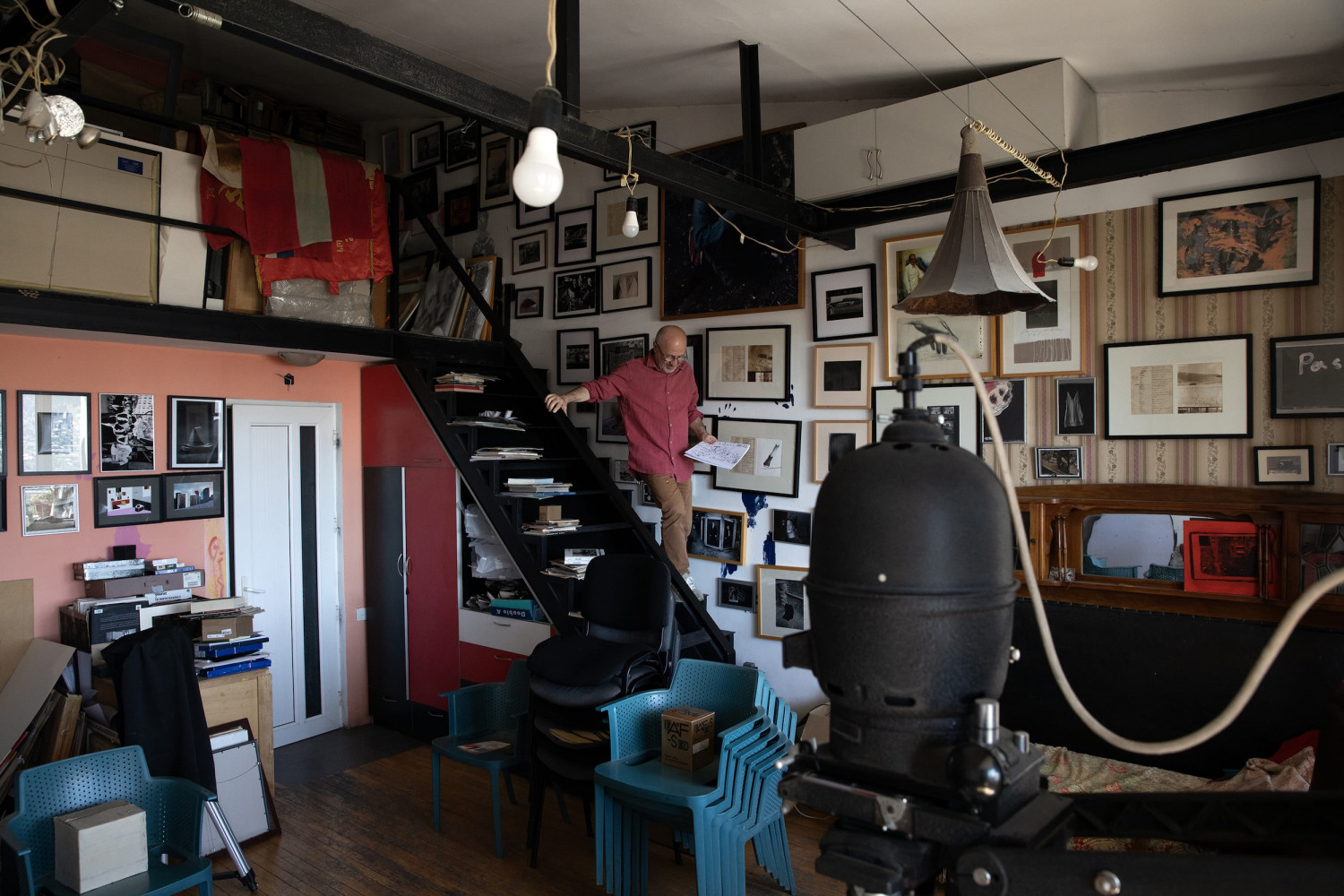
YOU SAY THERE WAS NO ONE TO LEARN FROM AND THAT YOU HAD TO DISCOVER THE WORLD OF CONTEMPORARY ART ON YOUR OWN. BUT JUDGING BY THE PHOTOGRAPHS IN YOUR ARCHIVE, THERE WAS NEVERTHELESS AN ARTISTIC “SCENE” IN TBILISI. WHEN DID YOU BECOME PART OF IT?
My first encounter with a person from the art world happened only in 1983. I met the artist Irakli Parjiani, who belonged to an older generation. He was interested in photography, while I was preoccupied with painting, so we often met in his studio and talked a great deal — not only about art, but also about philosophy and life in general. In a way, those conversations were lessons.
From that point on, I gradually began to form connections with the Tbilisi art scene. In 1985, I had my first solo exhibition, and that same year my friends and I founded the creative group "Point of View", which included Yuri Mechitov, Gogi Tsagareli, Dato Sulakvelidze, Boris Shaverdyan, Mirian Kiladze, Gia Javelidze, and Gia Tagviashvili.
A couple of years later, I met artists of my own generation, among them Karlo Kacharava. I came to one of his exhibitions, and he said he had already seen my work, so he suggested we come up with something together. That was how, in the late 1980s, we made several joint exhibitions.
I began spending a lot of time at the studio on Marjanishvili. These were auxiliary theatre spaces that had turned into studios for many artists — among them Mamuka Japaridze, Niko Tsetskhladze, Oleg Timchenko, Lia Shvelidze, and others who would later become major names in Georgian contemporary art. We exchanged experience, worked together, and learned from one another.
Karlo Kacharava was trained as an art historian; he spoke a lot about Western artists and showed us their work. These studios became a place of attraction not only for people interested in art, but also simply for those who wanted to feel freedom and some taste for life, because the times were truly difficult. I photographed there a lot.
THIS WAS THE PERIOD OF THE LATE 1980S AND EARLY 1990S — THE COLLAPSE OF THE SOVIET UNION AND THE BEGINNING OF THE CRISIS. WORKING WITH PHOTOGRAPHY, YOU NOT ONLY CAPTURED THE EMERGENCE OF YOUR FELLOW ARTISTS, BUT ALSO DOCUMENTED THE SOCIAL SITUATION IN TBILISI. IT SEEMS TO ME THAT IT IS PRECISELY FOR THIS PERIOD THAT YOU ARE CONSIDERED THE MAIN CHRONICLER OF GEORGIAN ART. WHAT WAS THE ARTISTIC SITUATION LIKE AT THE TIME?
Of course, when I was taking those photographs, I did not think they would become history. Or rather, I wanted my photographs to become a document of the era, but I did not think it would happen so soon. I photographed these people simply because I liked them and wanted to do it.
I could have imagined it becoming history in 100 years, but as it turned out, ten was enough. Only later did I begin to understand the documentary value of my archive. Many paintings have survived only in photographs, while the originals have long since been lost or destroyed. In that sense, photographs, of course, leave a greater trace.
The situation in the country was indeed difficult: sometimes there was no money even for bread, let alone paint. The materials used to make works were the cheapest possible, often bought second-hand at flea markets. Many works emerged from objects found in the theatre’s auxiliary spaces themselves. There were often pieces of old sets, construction materials, and other unwanted things left behind there — and all of it was put to use. These people had a great desire to do something, and it was precisely that desire that pushed them to work.
It should be said that camera film was not cheap at the time either, and it was not easy to get hold of. But it was important for me to continue doing photography, so I tried to find ways.

DESPITE THE LIMITATIONS IN RESOURCES, GEORGIAN ART DID NOT SIMPLY CONTINUE TO EXIST — IT WAS ALSO REMARKABLY DIVERSE: ARTISTS USED A WIDE RANGE OF MEDIA, TOOK OVER DIFFERENT SPACES FOR EXHIBITION PROJECTS, SUCH AS THE UNDERPASS OPPOSITE THE IVERIA HOTEL (NOW THE RADISSON BLU), AND CONTINUED TO MAKE LARGE-SCALE WORKS. IN YOUR VIEW, WHAT WERE THE MOST SIGNIFICANT EXHIBITIONS OF THAT PERIOD?
Everything that happened at the Caravanserai — the Tbilisi History Museum on Sioni Street — was very significant. The building itself had three floors: the museum exhibition was housed on the two upper levels, while the ground floor was always too damp for art because of its proximity to the Kura River. It was the first institutional space where we were given a venue for exhibitions and allowed to do whatever we wanted.
We occupied that space for about two years. During that time, we held several group exhibitions, which were important above all because they included not only artists of my generation, but also older authors who wanted to show their work freely. The space gathered around itself a large number of people from very different circles. It was at the Caravanserai that Mamuka Tsetskhladze showed his first performance, and that was an important event because he used a fundamentally new method. One that had previously been perceived not as art, but as a show put on by eccentrics.
Now I understand that, because of that difficult situation, the scarcity of resources, and the crisis, we were in a state of absolute freedom — censorship did not exist for us. Since no one cared about our art, and since no one really considered it art in the first place, artists could do absolutely anything they wanted without worrying about anyone’s opinion.
It was absolutely natural creativity. Today, artists tend toward… what do you call it? Self-censorship. As soon as Georgia became an independent country and the “Iron Curtain” lifted slightly, an art market began to take shape, and the approach to art changed.
TELL US MORE ABOUT THAT PERIOD. WHAT WAS HAPPENING TO ART IN GEORGIA AFTER THE COLLAPSE OF THE SOVIET UNION?
Georgia gained independence, and foreigners began coming to Tbilisi. Georgian artists, who had never been abroad before, also went to Europe for the first time — to show their art and, of course, to look at other people’s. It turned out that all this time we had been making works similar to those hanging in the best European museums. And while no one in Tbilisi took us seriously, there it proved to be valuable.
My first exhibition abroad took place in Amsterdam back in 1992, but because of the Civil War I was unable to go. In the end, the first time I attended one of my exhibitions abroad was a year later — in 1993, in Basel, at a group exhibition that became a continuation of what we had shown at the Caravanserai.
Of course, at that moment Berlin seemed to be the center of contemporary art, and in 1997 I had an exhibition there. At the same time, my works were being shown in New York, and I was offered the chance to go there, but I chose Germany instead. I remember that during one dinner, the Germans asked me why I had not chosen America, and I did not even understand the question. I said something like, “What do I need New York for? All the art is here.”
From then on, I exhibited abroad several times a year. This, of course, increased the visibility of Georgian artists. It was then that people began buying our works for sums that were unimaginable in Georgia at the time, although probably not so enormous for Europeans.
At one exhibition, someone bought four of my photographs for 1,000 dollars each, and with that money I bought a three-room apartment in Tbilisi, where my son now lives. And I even had a little left over. In short, it was a great deal of money for us.
It seems to me that this was the moment when the art market in Georgia began to take shape. Artists started restricting themselves because they were making works for sale. These could be perfectly good things, but they were made in order to be sold profitably. In a sense, art turned into a craft.


MANY YOUNG GEORGIAN ARTISTS BEGAN GETTING THEIR EDUCATION ABROAD AND STAYING TO WORK IN THE WEST. HOW DO YOU FEEL ABOUT THAT? AND WHY DID YOU NOT FOLLOW THAT PATH YOURSELF, IF GERMANY FASCINATED YOU SO MUCH?
Yes, that is true. Many people took advantage of the opportunities that opened up, left the country, and successfully built careers abroad. I see that as completely normal; it is simply not my path.
As for myself, I can say with certainty that I could not live anywhere except Georgia. I am a photographer, and it is important for me to understand what I am photographing. I know Tbilisi, I know the context here, and I can work with it. In another country, I am just a tourist. I can take pictures of beautiful building facades — they may be aesthetically pleasing, but they will be entirely uninformative.
Besides, visiting another country is not the same as living there. Once you are on the inside, you realize that every place has its own problems, and ours suit me quite well.
DESPITE THE FACT THAT MANY ARTISTS BUILD THEIR CAREERS OUTSIDE GEORGIA, I NOTICE THAT MANY OF THEM CONTINUE TO WORK — PERHAPS NOT WITH LOCAL CONTEXTS, BUT CERTAINLY WITH GEORGIAN THEMES. ANDRO WEKUA, FOR EXAMPLE. IS THAT TRUE?
It seems to me that Andro became a very European artist; we simply like to emphasize that he is Georgian.
But many do indeed try to preserve their identity, because that also fuels interest in their art. Georgia is a small country, with all the consequences that entails: a rare language that is difficult to translate, and therefore difficult to make more visible.
When I spoke with Europeans and said that I was from “Georgia,” most of them did not understand what kind of place it was or where it was located. Out of interest in my background and in the situation in the country, they also became interested in my art — as a kind of exoticism.
THE GEORGIANS IN EUROPE ARE CLEAR ENOUGH. BUT HOW DO YOU YOURSELF FEEL ABOUT THE RUSSIANS WHO HAVE COME TO TBILISI, AND DO THEY INFLUENCE THE ART SCENE?
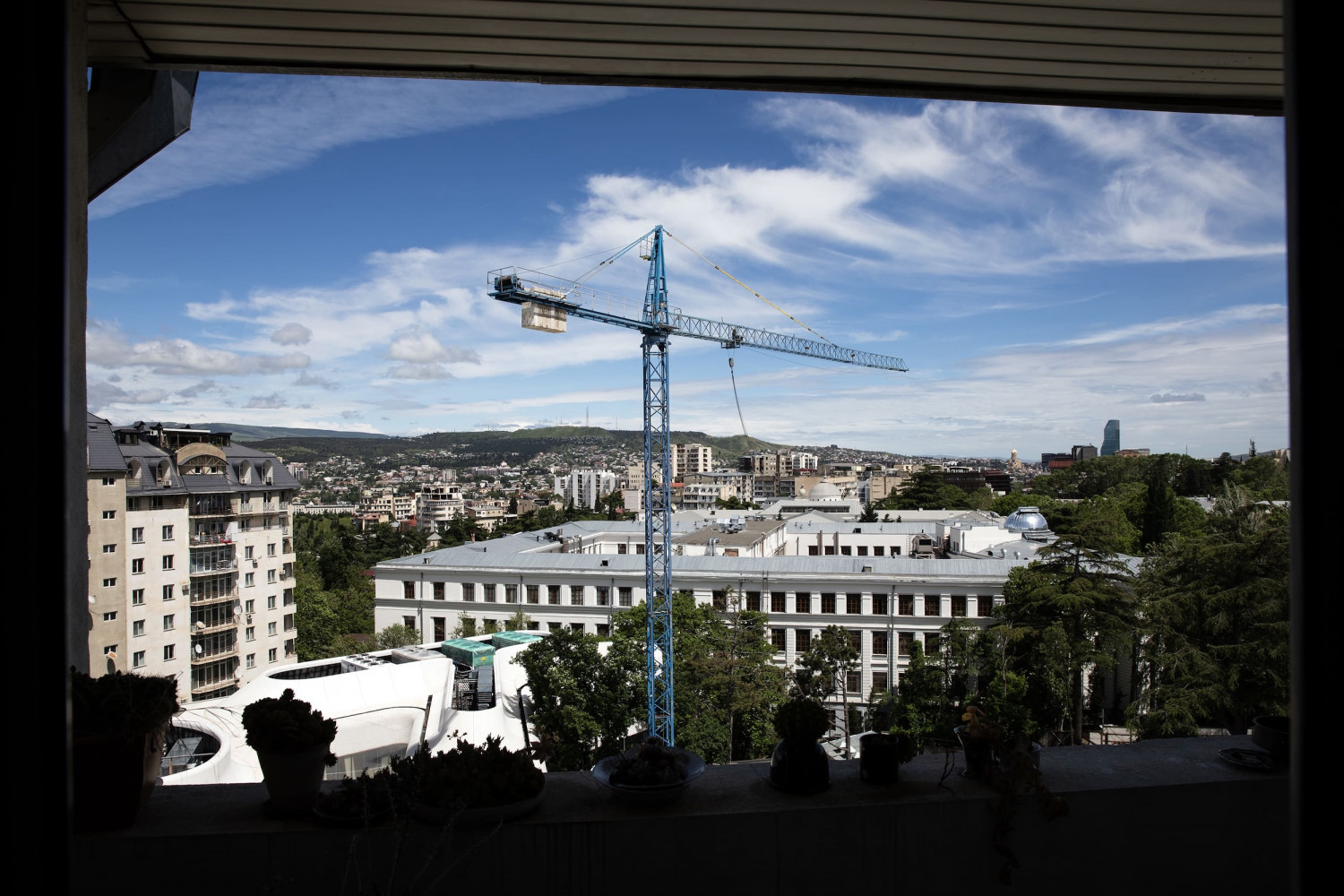
At a certain point, they became difficult not to notice. I like it when new people arrive, because they always bring something new with them. But they began to change the urban landscape, and I did not like that.
Later, I looked at it differently: the emergence of this kind of competition, primarily in business, forces everyone to become better.
As for art, globally speaking, they still do not have an influence on it. Perhaps only for now. I like observing Russian people in art, watching how they work, because they do it differently, and I can learn something from them.
BECAUSE OF THE NATURE OF YOUR WORK AND YOUR UNOFFICIAL TITLE AS A CHRONICLER, WE HAVE SPOKEN A LOT TODAY ABOUT OTHER PEOPLE AND OTHER PEOPLE’S WORKS. BUT I WOULD LIKE TO KNOW WHAT PROJECTS YOU YOURSELF ARE WORKING ON.
I do not like the word “project,” because I do not understand what it means. In the past, when I created series of works, I never thought of them as projects — I simply made works in the same style for as long as I could.
Although I mostly call myself a photographer, there is also an artistic practice present in my work. As I have already said, I have been drawing for quite a long time, but because for a long time it seemed to me that my drawings looked unprofessional, I showed them only to a limited circle of people. For example, if Karlo were alive — editor’s note: referring to the Georgian artist Karlo Kacharava — I could have shown them to him.
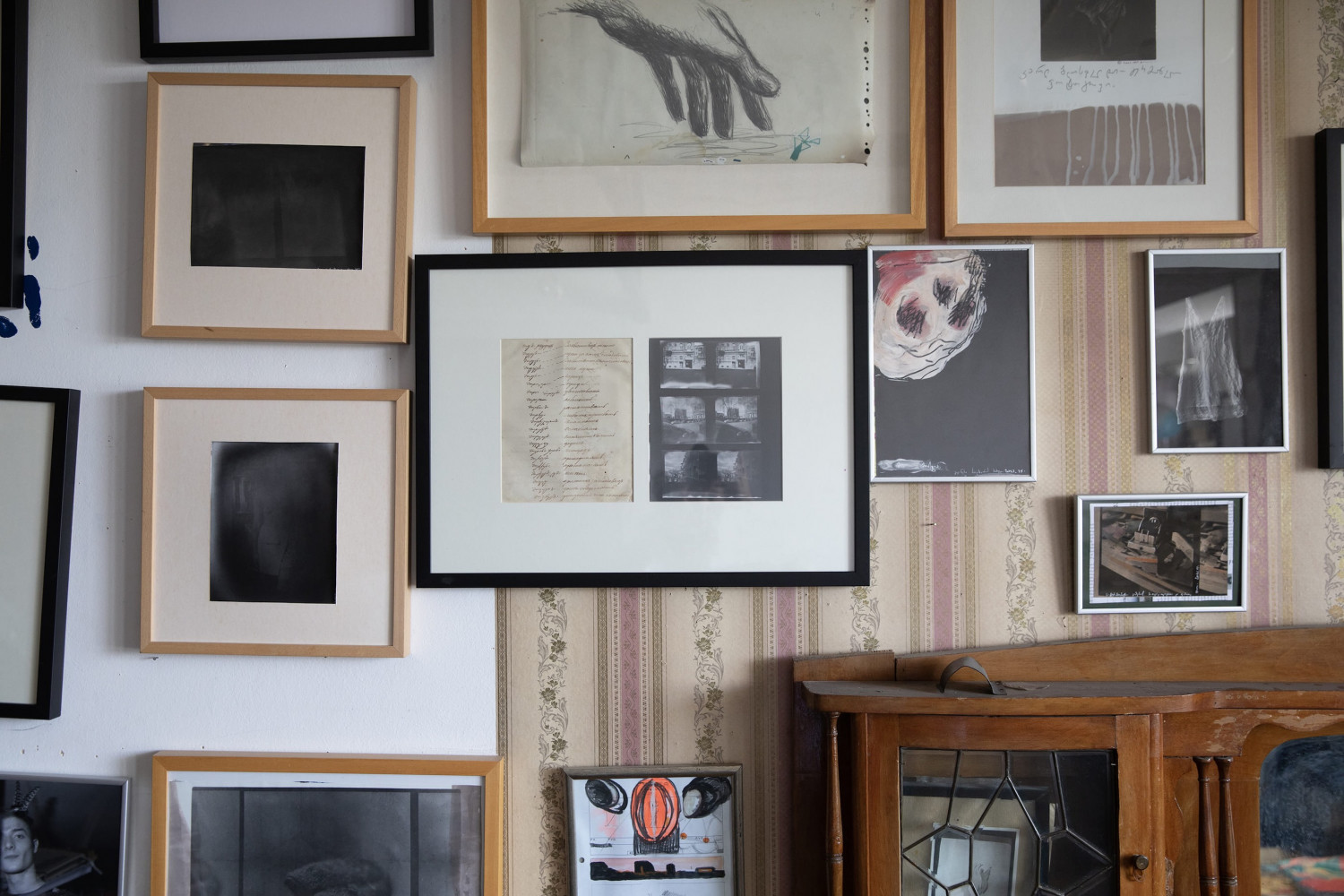
But I have many works in which I rework my own photographs, adding certain elements to them.
Back in the 1980s, I had what you would call a “project”: I applied fragments from Joyce’s "Ulysses" in Georgian onto photographs. The thing is that "Ulysses" was one of the first books to be published in Georgian during the Soviet period, before the full Russian translation appeared — usually, everything happened the other way around. Moreover, the translator Niko Kiasashvili consulted Sergei Khoruzhy while he was working on the Russian version — editor’s note: Sergei Khoruzhy was a Russian philosopher, translator, and scholar of Eastern Christian thought, and the author of the Russian translation of "Ulysses".
I read "Ulysses" over the course of about a year and a half, and throughout that time I made notes on photographs. That was how a large series came about — I could not even say how many works it contains. First, I showed it to my friend Tengiz Merzashvili, nicknamed Chubchik, who published an English-language samizdat about Georgian art. Only two or three issues came out, but he printed an article about this series, and in 1996 it was even exhibited.
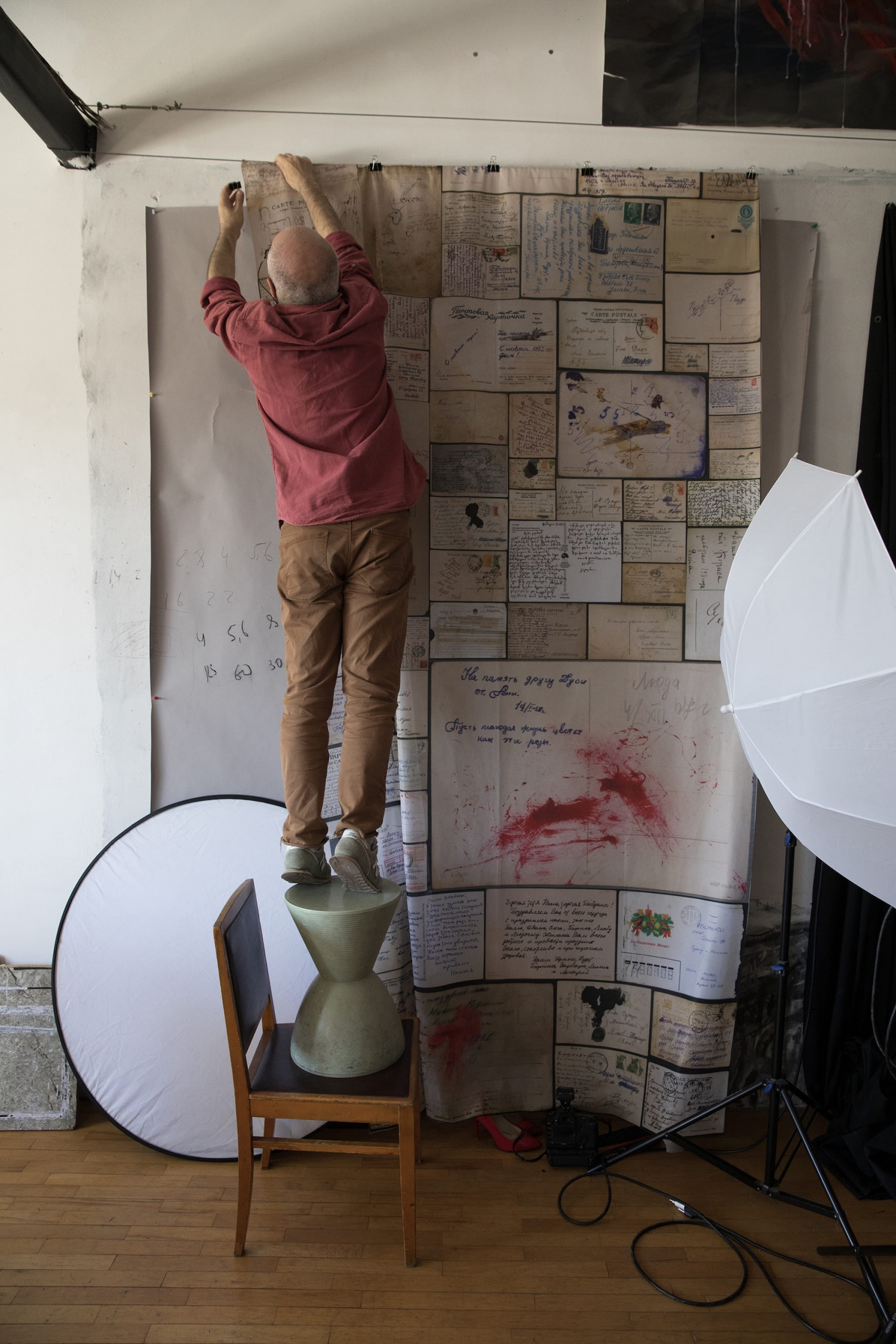
Now I am continuing the literary theme and working on a similar project. Among some waste paper, I found a handwritten Russian-Georgian dictionary from 1877 that someone had thrown away. Now I combine fragments of those manuscripts with my own photographs, which resonate with them in meaning.
I CANNOT HELP BUT ASK ABOUT THE EXHIBITION BASED ON YOUR ARCHIVE, WHICH LEILI ASLANOVA, MARIA POLNIKOVA, VLADIMIR SERYKH, AND US ARE PREPARING FOR LATE MAY. SHARE YOUR THOUGHTS ON THIS PROJECT.
Fragments of this archive have already been exhibited many times, in all kinds of interpretations, but I am interested to see how a Russian-speaking audience will perceive it.
Besides, you have chosen an unusual perspective: you are showing the photographs not through individual figures, as has usually been done before, but through points on the map. I would like to see that.


